A classical Latin curriculum, from first words to Vergil
The old classical schools taught Latin by reading it: easy texts first, then Caesar, Ovid and Vergil, every new word met in a sentence. This curriculum does the same with a ladder of graded readers, and gives each lesson the tools of this site: the dictionary, an annotated reader, and daily review of the words your student is learning.
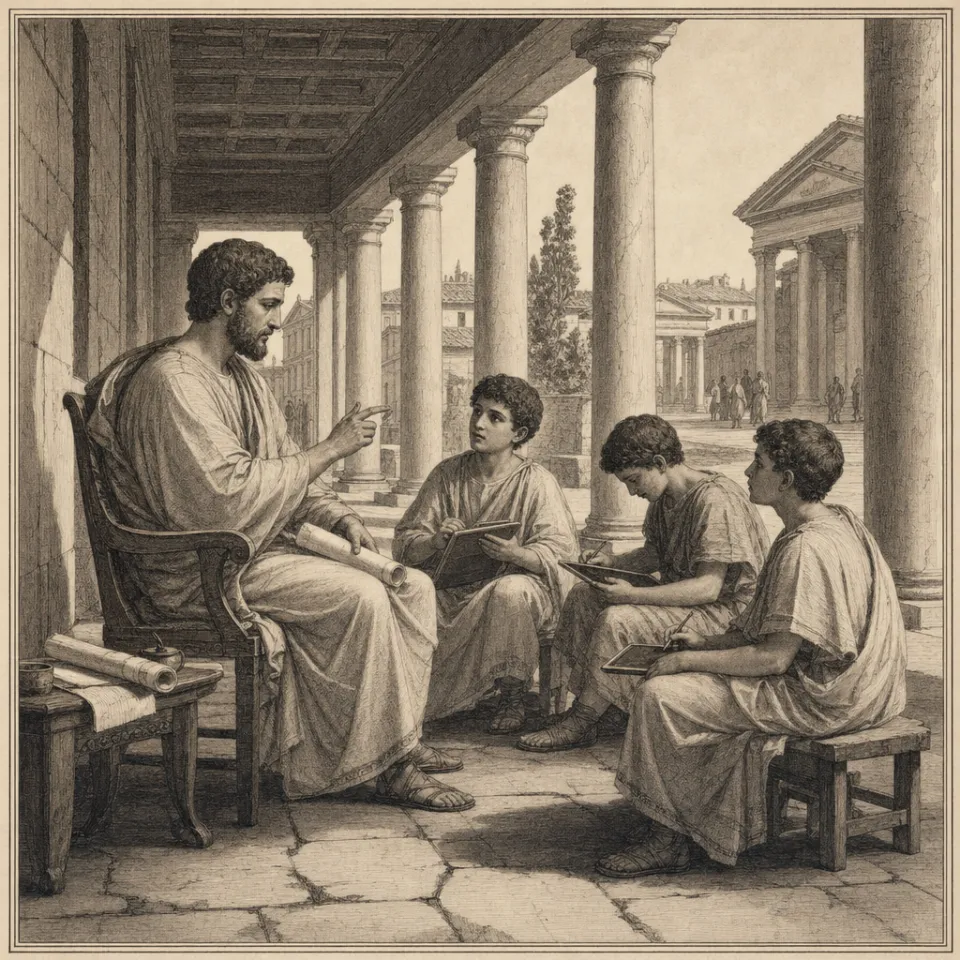
Scope and sequence
Ages and grades are a guide. Students move up when the current level reads easily, not when the calendar says so.
- PrōlogusGrades 2–4Ages 7–10
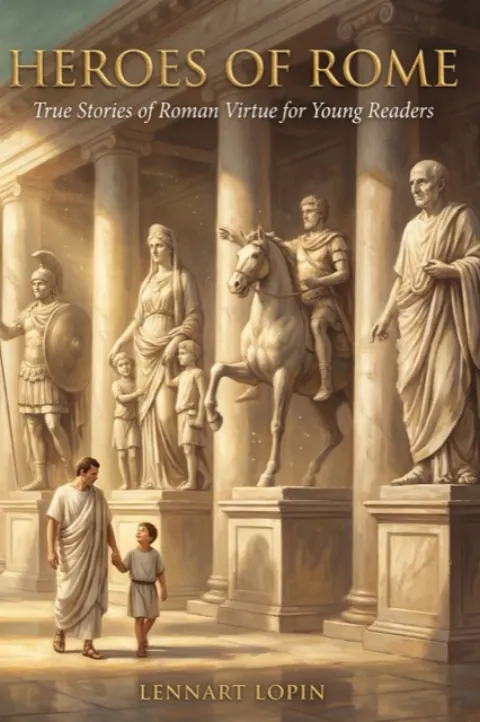
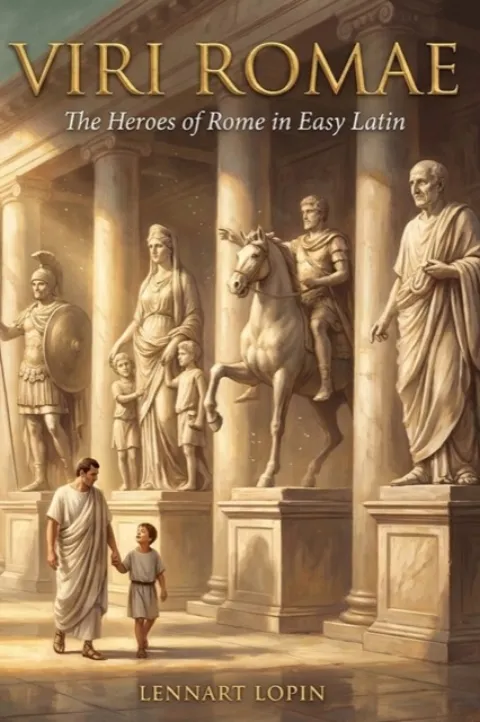
Rome's heroes read aloud in English: Horatius at the bridge, Cloelia, Cincinnatus. The stories the Latin books will retell.
A week Read one hero aloud; the child narrates it back.
- Gradus IGrades 4–6Ages 9–12
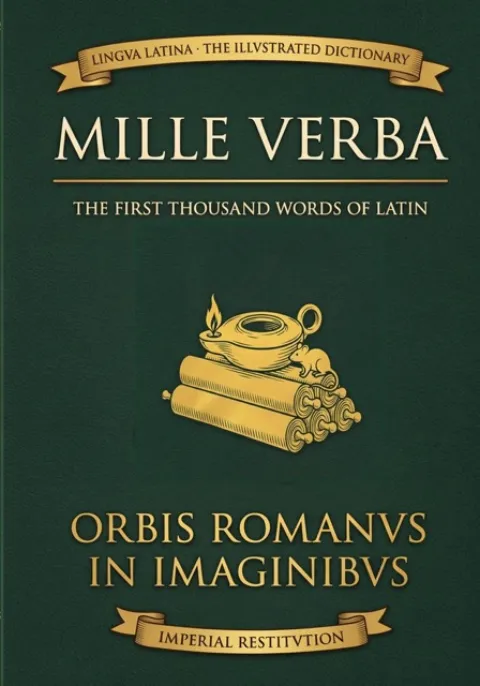
First Latin: the same heroes in very easy Latin, and the thousand commonest words taught in Latin through pictures.
A week One short chapter over three days; ten new words into review; one Mille Verba picture page.
- Gradus IIGrades 6–8Ages 11–14
Continuous reading: Roman stratagems, Caesar's war in Gaul and the young Julian, in controlled Latin glossed in Latin.
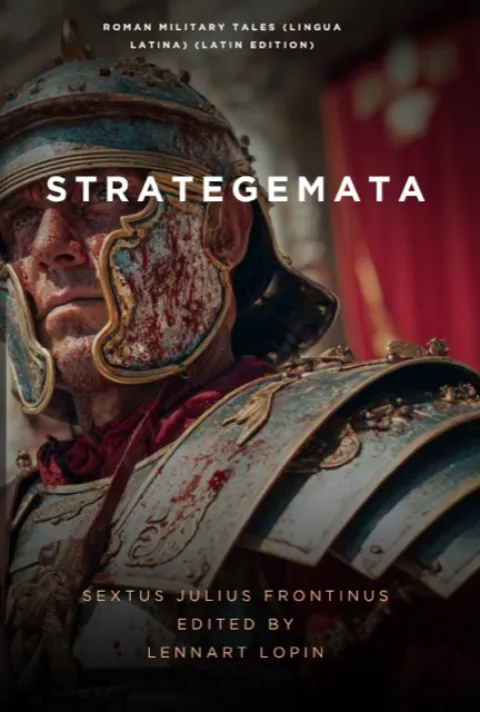 Strategemata IFoundation
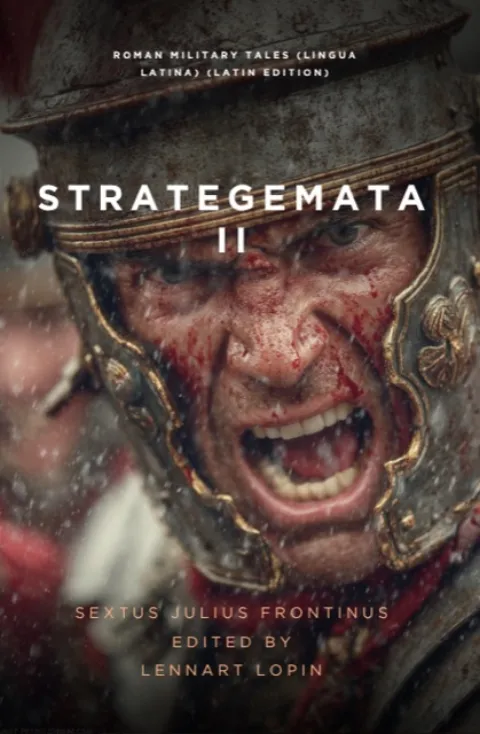 Strategemata IIIntermediate
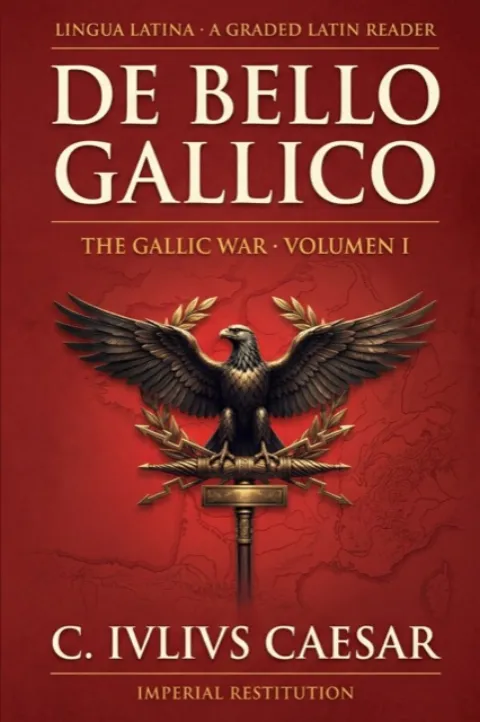 De Bello Gallico IFoundation
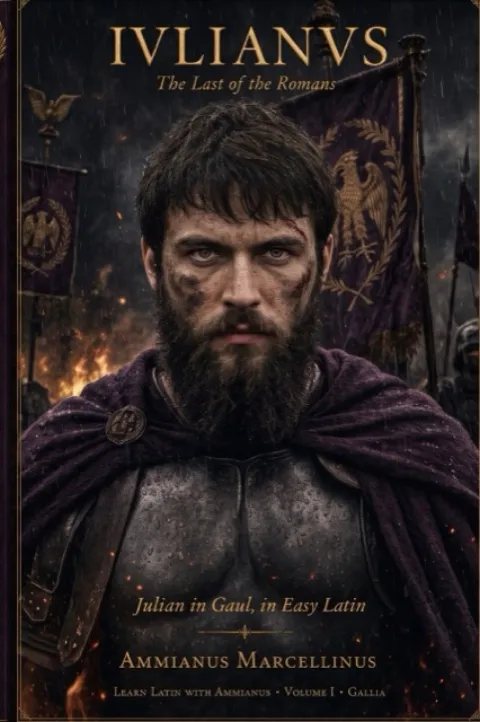 IVLIANVS I: GalliaPost-beginner
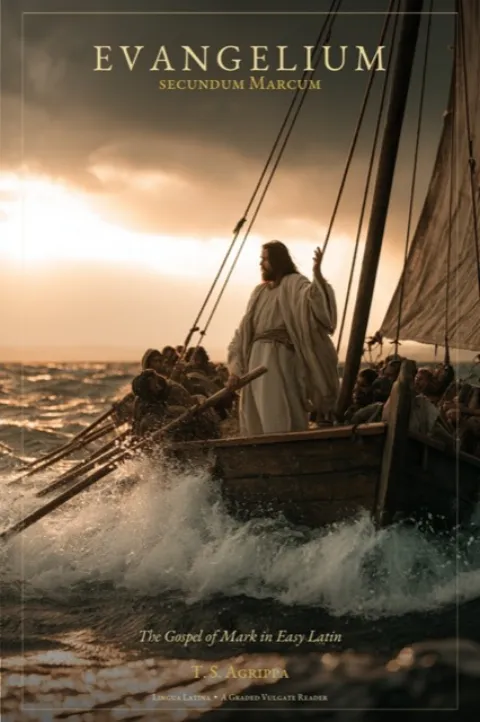 Evangelium secundum MarcumNo Latin required
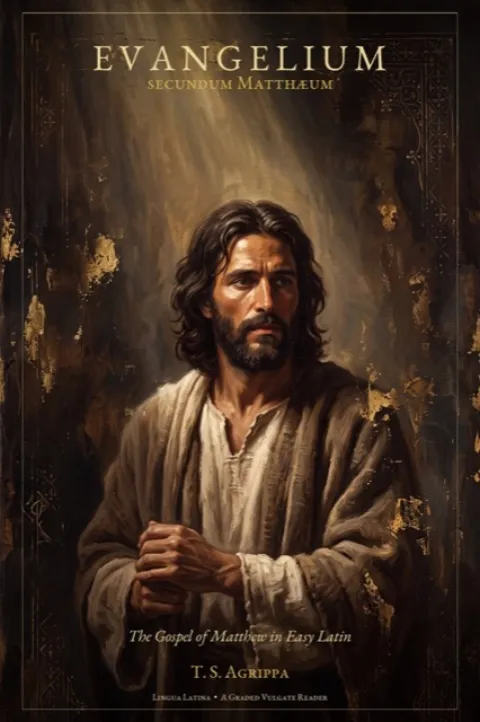 Evangelium secundum MatthaeumNo Latin required
A week A chapter a week; the glosses do the dictionary's work; narration in Latin or English.
- Gradus IIIGrades 8–10Ages 13–16
Real authors with support: more of Caesar, Pliny's letters, Seneca's sayings and Ovid's myths.
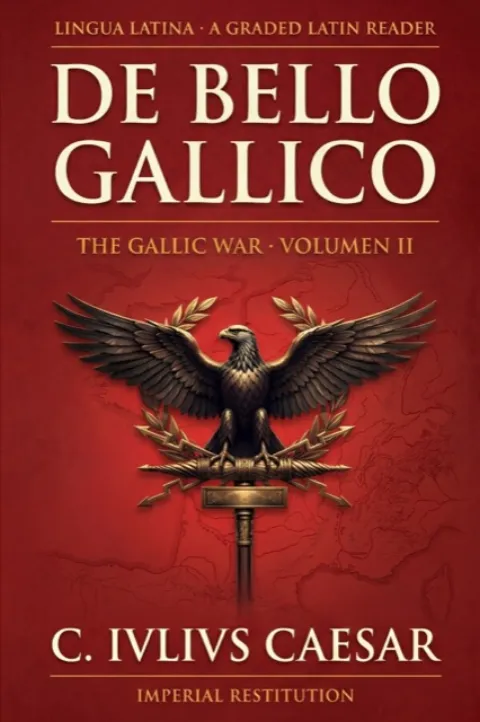 De Bello Gallico IIIntermediate
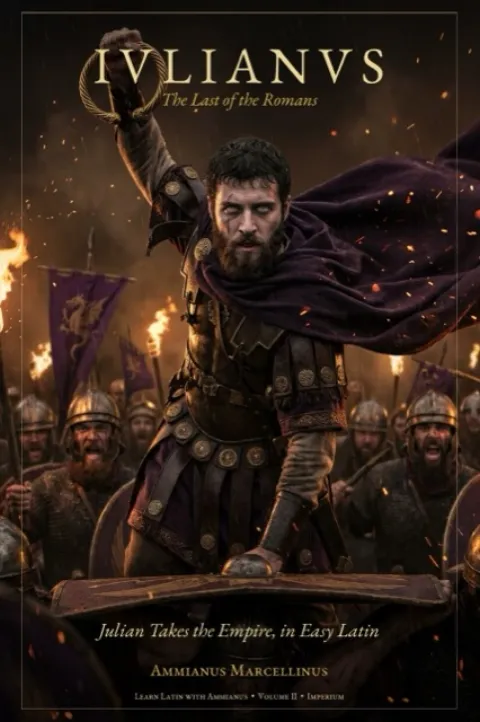 IVLIANVS II: ImperiumIntermediate
 EpistulaeIntermediate
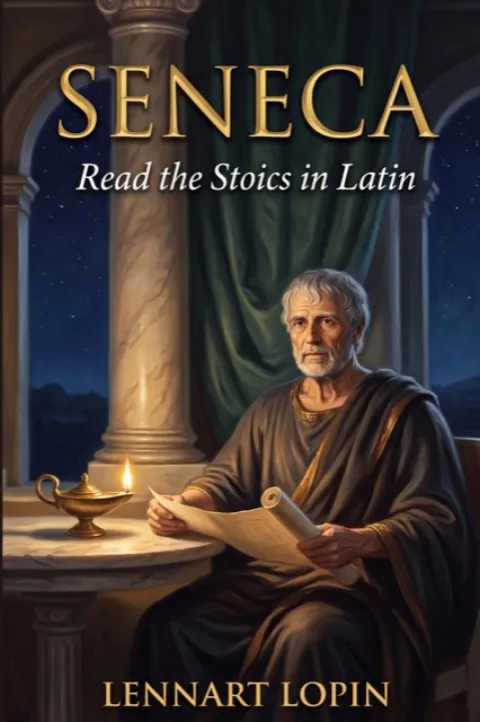 SenecaIntermediate
 Metamorphoses IIntermediate
A week A chapter a week plus one passage of the original in the annotated reader.
- Gradus IVGrades 10–11Ages 15–17
Toward the originals: fuller Latin, fewer supports, longer reading.
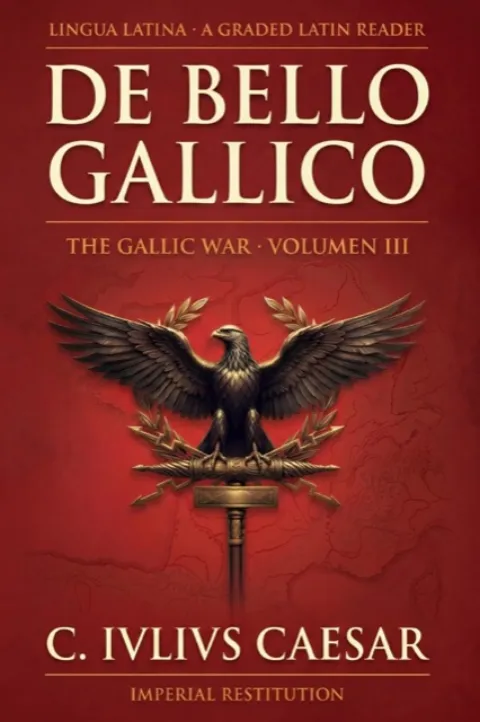 De Bello Gallico IIIAdvanced
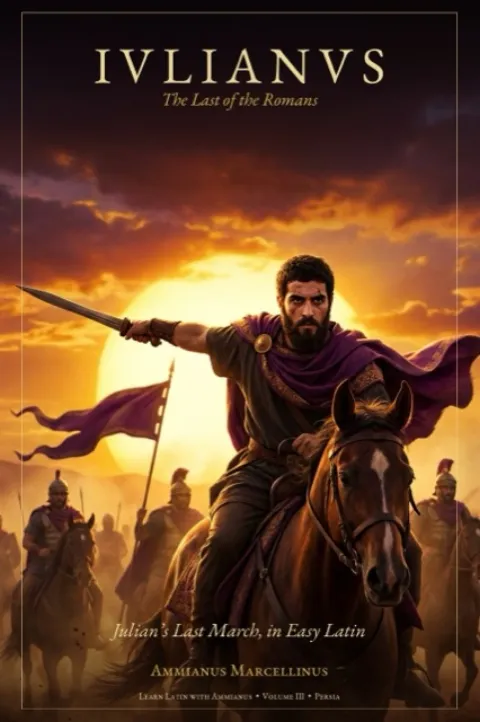 IVLIANVS III: PersiaUpper intermediate
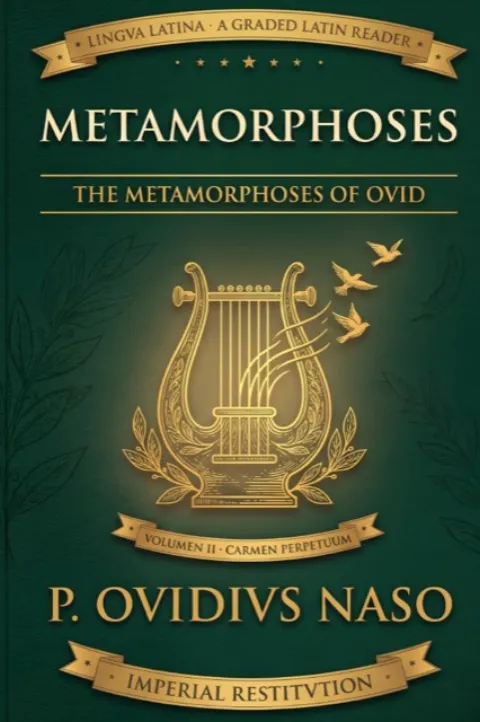 Metamorphoses IIIntermediate to advanced
A week Two chapters a week; original passages with notes and Allen & Greenough references.
- Gradus VGrades 11–12 · AP LatinAges 16–18
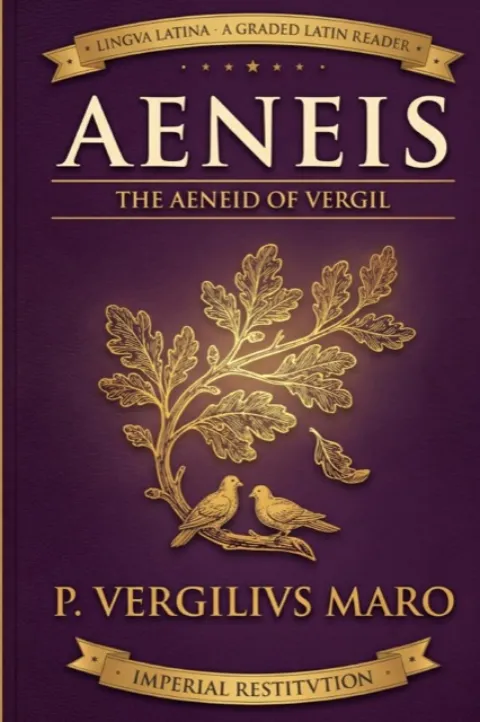
Vergil: the Aeneid retold in Latin, leading into Vergil's own lines and the AP Latin syllabus passages.
A week One book of the Aeneid every three weeks; scansion and the original lines in the reader.
What a lesson looks like
Every chapter of every reader is a lesson in four steps, and the course on each student's page always shows the next one.
- Verba The chapter's new words, as the book glosses them, go into the student's review, the way German schools used a Präparation.
- Lege Read the chapter aloud. New words are explained in the margin; any other word opens in the dictionary with a tap.
- Pēnsum Questions in Latin answered from the text, endings to write in, and one answer in a Latin sentence of the student's own, compared with a model. The questions and endings are marked at once.
- Grammatica One point of grammar the chapter uses, with its section in Allen & Greenough.
- Narrate and review The student retells the chapter, in English at first and in Latin later, and spends ten minutes on review. On the Familia plan, parents see each child's lessons, words, streak and hardest words.
What is free
Questions parents ask
- Is this a complete Latin curriculum?
- It is a reading curriculum: a sequence of books that takes a student from first words to Vergil, with the dictionary, an annotated reader and spaced review alongside. Many families pair it with a grammar for explicit drill; Allen & Greenough's grammar is free in the Academy, and every note in the reader links to it.
- Do I need to know Latin to teach it?
- No. New words are explained in the margin of every book, any word can be looked up here in any form, and any sentence in the reader can be shown in easier Latin or in English. A parent can learn alongside the child.
- Does it work for co-ops and classes?
- Yes. Every family reads the same text, chapters are short enough for a week, and each passage's vocabulary can be printed as a list in reading order. The books are in print for the table and online for the screen.
- How does it fit a classical education?
- It follows the old method of the classical schools: read the authors early and often, learn words in context, narrate, and climb from easy texts to Caesar, Ovid and Vergil. It complements the grammar stage of programmes such as Classical Conversations; we are not affiliated with any of them.
- What does it cost?
- The dictionary, the annotated reader, the Academy and the opening chapters of every book are free. The full online library is part of membership, and every book can be bought in print.